
Carded Cotton vs Combed Cotton: Key Differences, Benefits & Uses
Carded Cotton vs Combed Cotton is one of the most common comparisons in the textile and apparel industry. While both are made from natural cotton fibers, their manufacturing processes create significant differences in softness, durability, appearance, and overall garment quality.
When sourcing cotton garments, many fashion brands come across two common terms: carded cotton and combed cotton. Although both originate from the same natural cotton fiber, the manufacturing process creates significant differences in softness, durability, appearance, and overall garment quality.
For clothing brands, private label companies, and apparel buyers, understanding the difference between carded and combed cotton can help make better sourcing decisions and improve product quality.
What Is Carded Cotton?
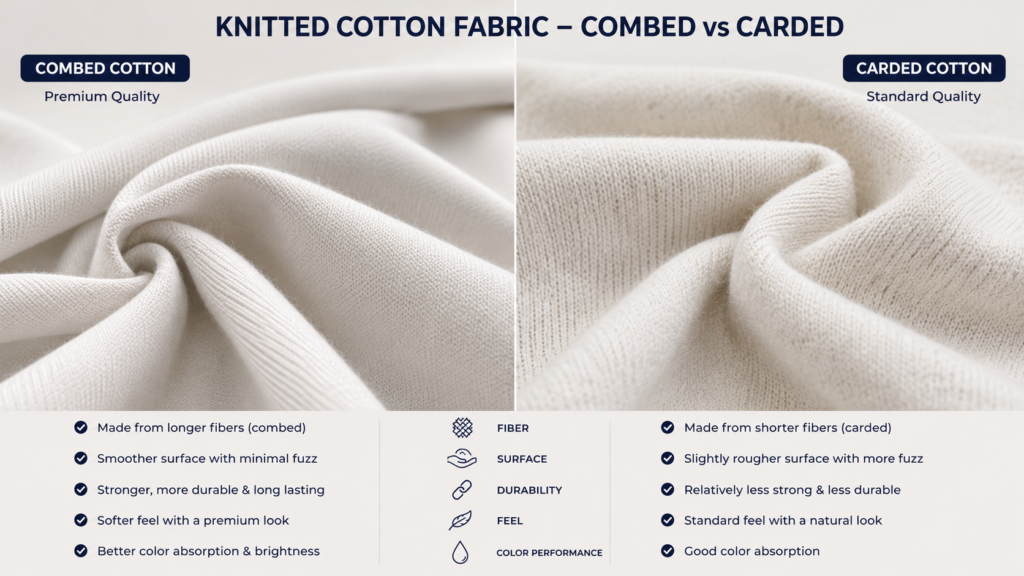
Carded cotton is produced through a carding process where raw cotton fibers are cleaned, disentangled, and roughly aligned before spinning into yarn.
During carding, most impurities are removed, but shorter fibers remain in the cotton. As a result, the yarn has a slightly fuzzy appearance and a less uniform structure.
Characteristics of Carded Cotton
- More economical than combed cotton
- Slightly rougher texture
- Contains short cotton fibers
- Higher tendency to pill over time
- Suitable for basic and budget-friendly garments
- Commonly used in everyday apparel and workwear
- Carded cotton offers a good balance between comfort and affordability, making it a popular choice for mass-market clothing production
What Is Combed Cotton?
Combed cotton undergoes an additional process after carding. Specialized combing machines remove short fibers and remaining impurities while aligning the longer fibers in a parallel direction. The result is a smoother, stronger, and more refined yarn that is ideal for premium garments.
Characteristics of Combed Cotton
- Exceptionally soft hand feel
- Stronger yarn structure
- Improved durability
- Reduced pilling
- Better fabric appearance
- Enhanced comfort against the skin
- Preferred for premium apparel collections
Because some fibers are removed during processing, combed cotton typically costs more than carded cotton. However, the quality improvement often justifies the additional investment.
| Feature | Carded Cotton | Combed Cotton |
| Manufacturing Process | Carded only | Carded + Combed |
| Fiber Length | Mixed fiber lengths | Mostly long fibers |
| Softness | Moderate | Very soft |
| Surface Appearance | Slightly fuzzy | Smooth and clean |
| Durability | Good | Excellent |
| Pilling Resistance | Lower | Higher |
| Cost | More economical | Premium |
| Typical Use | Budget garments | Premium apparel |
| Print Quality | Good | Superior |
Why Do Premium Fashion Brands Prefer Combed Cotton?
Most premium fashion brands prefer combed cotton because consumers immediately notice the difference in comfort and appearance.
Combed cotton fabrics offer:
- Better drape
- Cleaner surface finish
- Improved color consistency
- Enhanced print quality
- Longer garment life span
- Greater customer satisfaction
These advantages make combed cotton particularly popular for premium T-shirts, polo shirts, knit tops, luxury basics, babywear, and export-quality garments.
Applications in Knitwear Manufacturing
At Priyanka Enterprise, we offer only combed cotton yarn in cotton yarn segment.
Popular applications include:
- Knitted Polo-tshirt
- Fashion T-shirts
- Women’s knit tops
- Casual wear
- kids knitwear
- Private label collections
- Export garments
Frequently Asked Questions
Is combed cotton softer than carded cotton?
Yes. The removal of short fibers during combing creates a smoother and softer fabric surface.
Does combed cotton last longer?
Generally, yes. Longer fibers create stronger yarns that are more resistant to wear and pilling.
Why is combed cotton more expensive?
The additional combing process increases production costs and removes a portion of the raw cotton, resulting in higher-quality yarn.
Is carded cotton bad quality?
Not at all. Carded cotton is widely used in the apparel industry and offers excellent value for many garment categories. The choice depends on the intended product and target customer.
Conclusion
The difference between carded cotton and combed cotton lies primarily in fiber preparation. Carded cotton provides affordability and practicality, while combed cotton delivers superior softness, durability, and a premium appearance.
For brands focused on quality, customer satisfaction, and long-term value, combed cotton is often the preferred choice. However, carded cotton remains an excellent solution for cost-sensitive apparel programs.
Understanding these differences helps fashion brands, retailers, and sourcing managers select the most suitable material for their next knitwear collection.
Looking for a Knitwear Development Partner?
Early technical knitwear conversation can save time, costs and unnecessary revisions.
Contact us to discuss your project and develop the most suitable solution together.